
Paver Walkways & Driveways
Durable, beautiful hardscapes that guide guests to your door and stand up to years of traffic.
Why Pavers Beat Concrete Every Time
When it comes to driveways and walkways, you have options: plain concrete, asphalt, or pavers. While concrete costs less upfront, pavers deliver better long-term value and significantly more curb appeal. Concrete cracks and stains, and when it does, you're stuck with ugly repairs that never quite match. Pavers, on the other hand, can be individually replaced if damaged, and they actually get better looking as they age and develop a weathered patina.
Pavers handle freeze-thaw cycles better than concrete because the joints between pavers allow for expansion and contraction. This flexibility prevents the cracking problems that plague solid concrete slabs. In Escondido, where temperature swings can stress hardscapes, this durability advantage matters. Plus, if you ever need to access underground utilities, pavers can be lifted and reset, something impossible with concrete without major demolition.
Beyond durability, pavers offer design flexibility that concrete simply can't match. Create patterns, borders, and color combinations that reflect your personal style. Your walkway or driveway becomes an architectural feature rather than just a functional necessity. We design custom paver installations that complement your home's architecture and landscaping, creating a cohesive outdoor environment that impresses everyone who visits.
Where Pavers Make the Biggest Impact
Front Walkways
Your front walkway is the path guests take to reach your door, making it one of the most visible features of your property. A well-designed paver walkway creates a welcoming entrance while adding substantial curb appeal. We can match your walkway to existing hardscapes or create a statement piece that stands on its own. Curved paths feel more organic and inviting, while straight geometric designs convey modern sophistication.
Driveways
Paver driveways handle the weight of vehicles without problems when properly installed. Modern pavers are engineered specifically for driveway use, with interlocking designs that distribute weight evenly. You can create patterns that define parking areas, add borders for visual interest, or keep it simple with a clean, uniform look. Permeable pavers are an option if drainage is a concern, allowing water to filter through rather than running off.
Side Yards and Garden Paths
Don't forget the paths around your home. Paver walkways through gardens or along side yards improve access while protecting your landscaping from foot traffic. These secondary paths don't need to match your main walkway, you can use different materials or patterns to create distinct zones in your outdoor space. Natural stone pavers work beautifully in garden settings, while concrete pavers offer consistency and precision.
Design Considerations
Pattern selection affects both aesthetics and installation cost. Running bond patterns are classic and efficient. Herringbone patterns add visual interest and extra strength for driveways. Basketweave creates a traditional look perfect for historic homes. We'll show you pattern options and explain how each affects your project. Color choices should complement your home's exterior, and we bring samples so you can see combinations in actual lighting conditions, similar to how we approach custom patio projects.
The Right Way to Install Pavers
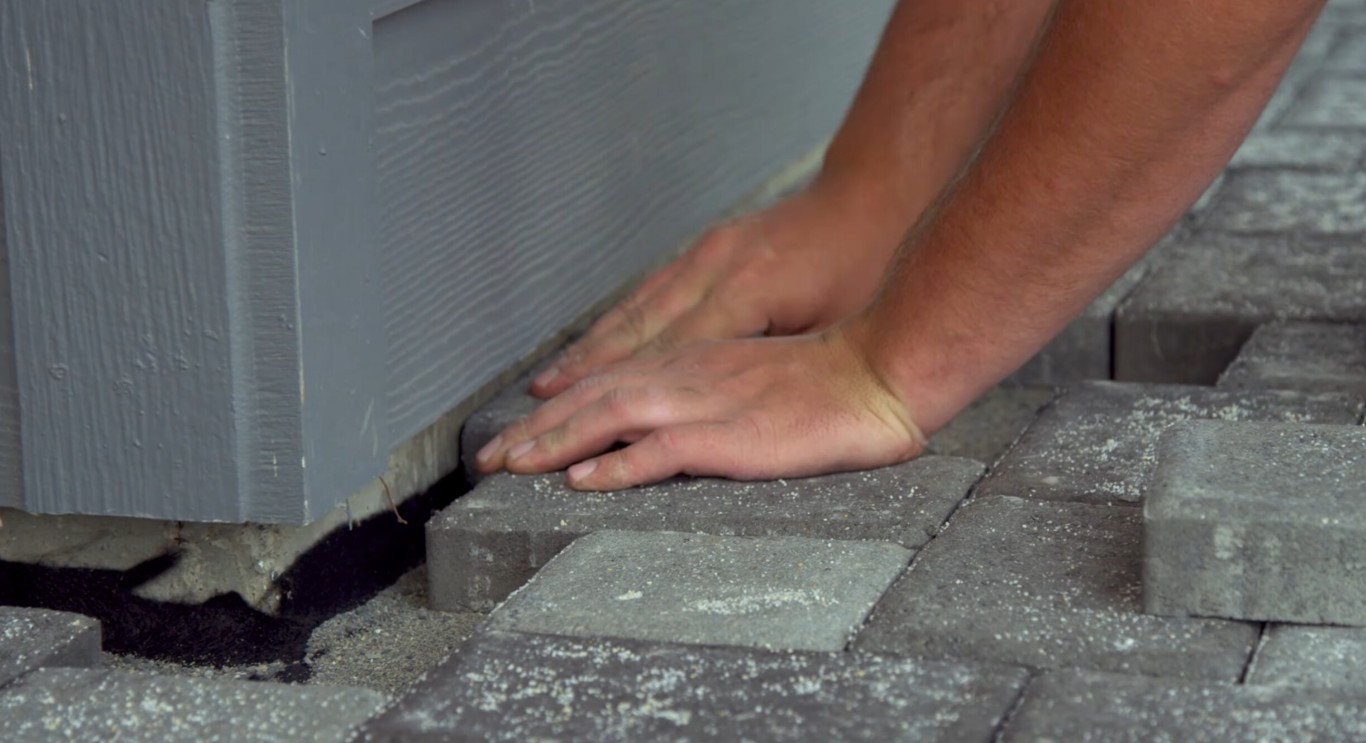
Proper paver installation is all about the base. Shortcuts here lead to settling, sinking, and uneven surfaces within a few years. We excavate to the proper depth based on the application, typically 7 inches for walkways and 12 inches for driveways. The excavated area is filled with compacted crushed stone in layers, with each layer thoroughly compacted before the next is added. This creates a stable foundation that won't shift or settle.
Edge restraints are critical for keeping pavers locked in place. Without proper edging, pavers gradually spread apart and the installation fails. We install commercial-grade edge restraints that anchor into the base and hold the entire paver field securely. A layer of bedding sand goes down next, screeded perfectly level to ensure even paver placement. This attention to detail ensures your installation looks perfect and stays that way.
Once pavers are placed, we fill joints with polymeric sand that hardens when activated with water. This sand prevents weed growth, resists washing out, and helps lock pavers together. The entire surface is compacted with a plate compactor to set everything firmly in place. Proper drainage is built into the design with appropriate slopes that direct water away from structures. These steps ensure your pavers will perform well for decades:
- Proper Excavation: Dig deep enough to accommodate base materials and achieve final grade
- Compacted Base: Multiple layers of crushed stone, each thoroughly compacted for stability
- Edge Restraints: Commercial-grade restraints that prevent lateral movement over time
- Level Bedding Sand: Screeded sand layer ensures uniform paver height across entire installation
- Polymeric Sand: Joint filler that hardens to resist weeds and washout while allowing drainage
We follow industry best practices and manufacturer specifications for every installation. This approach costs more than budget methods, but it delivers results that last. Many failing paver installations we're called to repair weren't installed wrong because of bad luck, they failed because corners were cut during installation. We do it right the first time, just like our retaining wall construction.
Common Questions About Paver Projects
Start Your Walkway or Driveway Project
Schedule a free consultation to discuss your paver project. We'll measure your space, show you material options, and provide a detailed estimate.
Call (442) 999-8843