
Loading...
Serving Escondido, CA and surrounding areas. (442) 999-8843
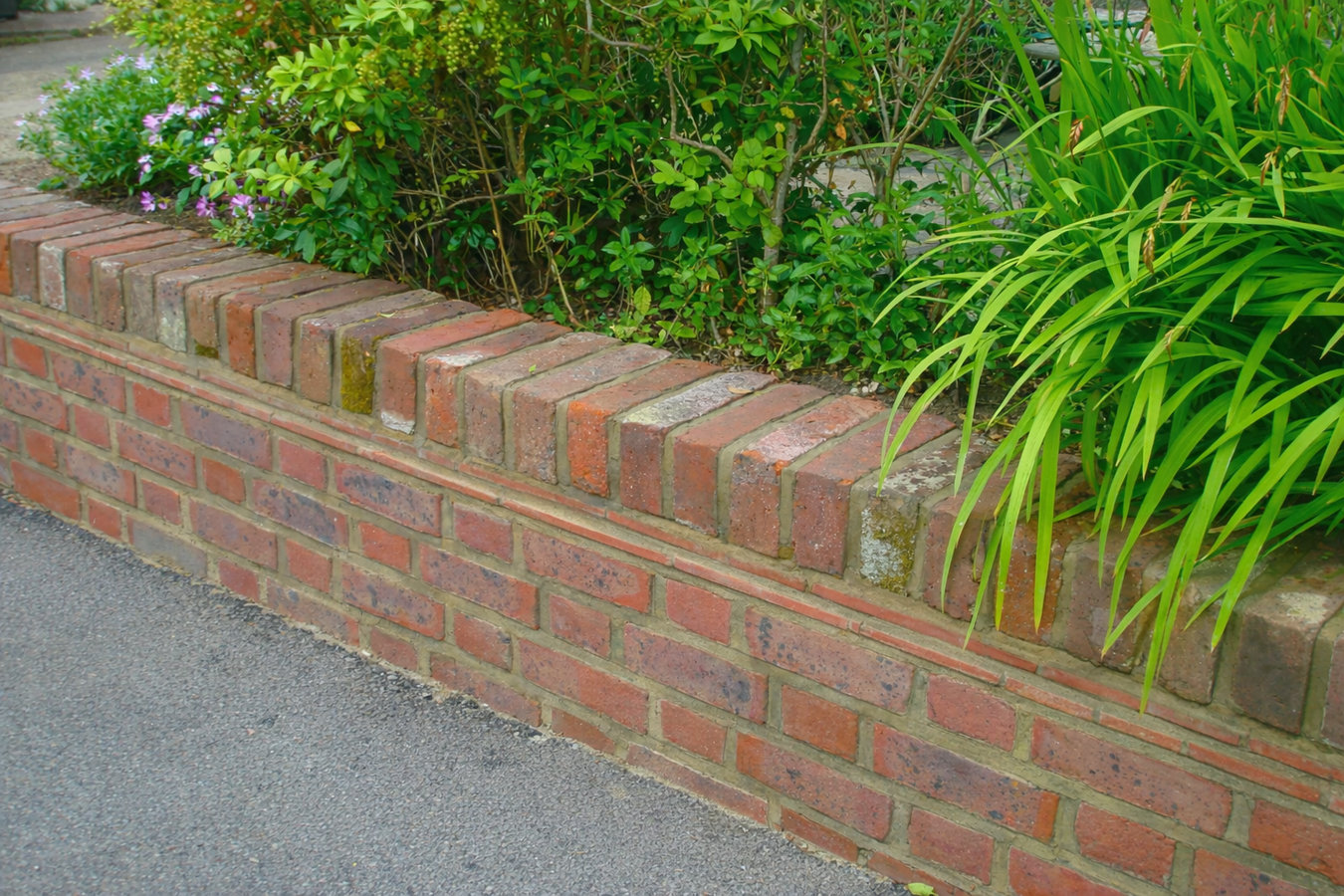
A leaning wall, a wood fence that keeps blowing over, or a backyard that needs a permanent edge. We build brick walls in Escondido with footings sized for local clay soils and permits handled start to finish.
Brick wall installation in Escondido means a mason digs a concrete footing, lets it cure, then lays individual bricks course by course in mortar - checking every row for level and plumb - with most residential garden or boundary walls taking one to five days of active construction after the footing is set.
The reason so many brick walls fail in Escondido is not the bricks - it is the footing underneath them. Escondido sits on clay-heavy soil that swells in the winter rains and shrinks back down in the dry summer heat. A footing that was not dug deep enough or sized for that movement will start cracking the wall above it within a few years. That is a footing problem, not a brick problem, and it starts at the design stage - before any material is ordered. If you are also planning to improve the masonry finish on your home's exterior surfaces, our brick repair service handles that work and can often be coordinated in the same visit.
Brick also compares favorably to wood fencing in Escondido's climate. Wood warps and splinters under the intense UV exposure, and Santa Ana wind events regularly knock down fence panels that were never built to handle the gusts. A properly built brick wall does not warp, rot, or blow over - and it does not need to be replaced every several years like a wood fence often does.
Stand back and look at your wall from the end - if it leans noticeably in any direction, the footing underneath has likely shifted. In Escondido, this is especially common after a wet winter, when clay-heavy soil swells and then contracts, slowly pushing walls out of alignment. A leaning wall will not correct itself and is a safety risk.
Cracks that follow a diagonal stair-step pattern through the mortar - rather than cutting straight through the bricks themselves - are a classic sign that the wall's foundation has moved unevenly. This pattern is common in Escondido's older neighborhoods where original footings were shallow and the soil has been through decades of wet-dry cycles.
Escondido's hillside and canyon-adjacent lots often have grading that directs runoff toward foundations and patios. A properly built retaining or garden wall can redirect that water and protect your foundation from erosion. If you notice pooling water near your house after rain, a brick wall may be the right long-term fix.
Escondido's Santa Ana wind events are hard on wood fencing. If you have replaced fence boards or reset fence posts more than once in the last few years, a brick wall is worth considering as a permanent alternative that will not be damaged by wind, UV, or dry heat.
We build brick walls from the footing up - starting with a soil assessment, calling 811 before any digging begins, pouring a concrete footing sized for your specific wall height and local soil conditions, and laying every course of brick with uniform mortar joints checked for level and plumb throughout. We handle the permit application with the City of Escondido Development Services when required - including coordinating any city inspection at the footing and finished stages - so you do not have to navigate that process yourself. We also advise on brick selection, including tone and color considerations for properties near Escondido's wildfire-prone areas where soot staining on light-colored brick is a real, recurring maintenance issue. For homeowners who want a natural stone finish instead of or alongside brick, our stone masonry service covers that work and uses the same footing and drainage approach.
We also handle brick wall repairs - mortar repointing on walls where joints have cracked or crumbled, brick replacement where individual units have spalled or shifted, and footing assessment when a wall has begun to lean. Catching a mortar problem early costs far less than rebuilding a section of wall after it has moved.
Best for homeowners who want to define a flower bed, raised planter, or seating area with a low brick wall that adds structure and a finished look to the yard.
Best for homeowners replacing a failing wood fence or adding a permanent boundary line that holds up through Santa Ana winds and years of intense Southern California sun.
Best for sloped Escondido properties where soil erosion, water runoff, or grading changes require a structural wall to hold back earth and redirect drainage.
Best for existing brick walls in Escondido where mortar joints have cracked, bricks have shifted, or a section has begun to lean - repairs that are far less costly when addressed early.
Escondido's clay-heavy soils are the core challenge for any masonry wall in this area. Clay expands when it absorbs winter rain and contracts as it dries out in the summer heat - a cycle that stresses the footing of a wall season after season. In the older neighborhoods built in the 1950s through 1970s, underground utilities are often imprecisely mapped, which means footing excavation without a proper 811 utility call can break water lines or gas lines that the property owner is then responsible for repairing. We call 811 before every dig as required by California law. The city's permit threshold of 30 inches for freestanding walls and 24 inches for retaining walls is also worth understanding before you start planning - many Escondido homeowners discover mid-project that a permit is required, which delays work that has already begun. For homeowners in Chula Vista, CA, permit thresholds differ but the soil and climate considerations are similar. Homeowners in San Marcos, CA deal with the same clay soil challenges and many of the same HOA restrictions found in Escondido's planned communities.
Escondido also sits in a region with active wildfire seasons, and the smoke and ash that accompany nearby fires can stain light-colored brick and degrade mortar over time if walls are not occasionally rinsed down. Choosing a brick tone that hides soot - or budgeting for periodic cleaning - is a practical consideration that a contractor who works in this area regularly will raise during the design conversation. You can verify contractor licenses before hiring through the California Contractors State License Board and check permit requirements for your specific project through the City of Escondido Development Services.
We ask a few questions before scheduling - wall type, rough height and length, and whether you have HOA restrictions. Most inquiries receive a response within one business day, and we come out for a free on-site estimate without requiring a commitment.
We visit your property, assess the soil and slope, check for underground utilities, and review any drainage concerns. You receive a written estimate itemizing labor, materials, and permit fees so you can compare it clearly against other bids.
Where required, we submit the permit application to the City of Escondido and wait for approval - typically one to three weeks. We then call 811, dig the footing trench, and pour the concrete base. The footing needs at least 24 to 48 hours to harden before bricklaying begins.
We lay bricks course by course, checking each row for level and plumb. When construction is complete, we coordinate any required city inspection, clean up the work area, and walk the finished wall with you before leaving the site.
No vague verbal quotes. We visit your site, assess the soil, and give you a clear breakdown before any work begins.
(442) 999-8843Escondido's expansive clay soils are the most common reason brick walls fail before their time in this area. We size and depth footings for the specific soil conditions on your property - not a national average - so your wall stays straight through the wet-dry seasonal cycles that undo walls built to generic specs.
The City of Escondido requires permits for most brick walls, and a missed permit creates real problems when you go to sell your home. We handle the permit application, communicate with Development Services, and coordinate any required city inspections - you do not have to manage any of that process.
Many Escondido neighborhoods - particularly in newer master-planned communities - have HOA rules governing wall height, material, and color. We ask about HOA restrictions before finalizing any plan, and we can help you put together the documentation for HOA approval before any material is ordered.
Our mortar joint work follows the quality benchmarks established by the Brick Industry Association - uniform joint thickness, proper profile so water runs off, and no excess mortar smeared across brick faces. These details determine whether a wall looks right in twenty years or starts showing its age in three.
The difference between a brick wall that lasts a generation and one that needs attention in a few years is almost entirely in the planning and foundation work - not in how the surface looks on day one. We focus on the parts you cannot see because those are the parts that determine what you end up with.
Natural stone walls and features built using the same footing and drainage approach as brick - for homeowners who prefer the character and texture of stone over fired brick.
Learn MoreTargeted repair and repointing for existing brick walls and structures where individual units have spalled, shifted, or mortar joints have deteriorated over time.
Learn MoreSpring and early summer fill up fast - getting your estimate now means your wall can be permitted and built before the busiest season begins.